How to Identify and Date Vintage British Postcards: A Beginner's Guide
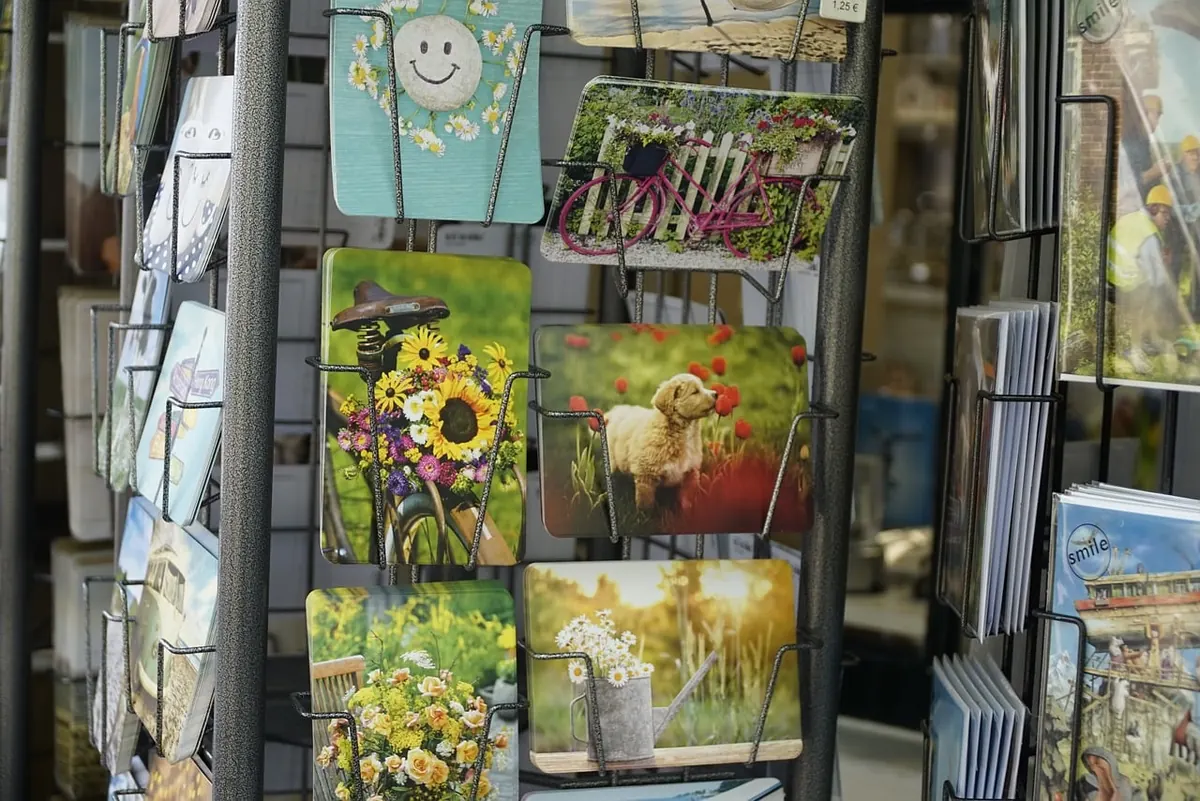
Between the 1890s and the First World War, Britain posted picture postcards by the million: seaside promenades, aunties in enormous hats, the local railway station, a joke about the mother-in-law. Most of them survive, which is why they still turn up in shoeboxes, albums and car boot sales. Dating them is largely a matter of reading the clues a card wears on its surface — how the back is divided, what the postmark says, which stamp paid the postage, who printed it and how it looks. No single clue settles everything. Together, they will usually get you within a few years.
Start with the back: divided or undivided
Turn the card over before you look at the picture. Until 1902, British postcards had an undivided back: nothing but space for the address. Senders had to squeeze their message onto the picture side, usually around the sky or across the pier. From 1902 the Post Office allowed a vertical line down the middle of the back, giving one half to the address and one to the message. A divided back with an unobstructed picture therefore points to printing in 1902 or later.
That rule has a firm early edge but says nothing about the late one — divided backs were standard for the next seventy years and still are. Treat it as a floor, not a date. And remember that old stock lingered: someone could perfectly well post an undivided card in 1910 because it was still in the drawer.
Read the postmark properly
The postmark is the most useful evidence on the card, because it carries a date. It is also the part most people skim past. Hold the card at a shallow angle to a lamp; if the ink is faint, photograph it and zoom in on a screen. Then note three things: the town, the date, and the style of the stamp itself.
Postmark types worth recognising
- Circular date stamps — the everyday handstamp, with town, date and often a small number in the centre, which is a handstamp number rather than part of the date.
- Squared circle postmarks — a circle set inside a square, used from the 1880s into the 1910s and prized for their crisp lettering.
- Duplex handstamps — a dated circle joined to a barred section that cancels the stamp.
- Machine postmarks — wavy lines or a slogan beside the date; British machines appear from the 1880s and become routine in the early twentieth century. Slogans such as "Post Early for Christmas" are datable in themselves.
One caution. A postmark tells you the card was sent no earlier than its printing, never the reverse. A card printed in 1905 might be posted in 1920, and a card delivered by hand or slipped into an envelope may carry no postmark at all.
Let the stamp narrow the window
British inland postcards travelled for a halfpenny from 1870 until the rate rose during the First World War, which is why so many cards carry a green ½d stamp. A penny stamp on an inland card points to the years afterwards, and the rate climbed again during and after the Second World War. The monarch's head on the stamp gives you a bracket: Edward VII from 1902, George V from 1910, George VI from 1936, Elizabeth II from 1952. Combine that with the postmark and you are usually down to a handful of years.
Publisher marks, series numbers and printers
Publishers signed their work. Look along the left edge of the picture, in the bottom corner, or in tiny type on the back for a name, a series title and a number: Raphael Tuck & Sons, Valentine's of Dundee, Judges of Hastings, the Photochrom Co. of Tunbridge Wells, and hundreds of local stationers and photographers. Series numbers are the gold dust. Publishers issued cards in numbered runs, and matching a number to a known series can date a card to the year.
"Printed in Germany"
Before 1914 the finest colour lithography in Europe came out of Germany, and a great many British cards were printed there. When war broke out the trade stopped overnight and British printers took over, marking their output "Printed in England" or "British Manufacture". So a "Printed in Germany" line, however faint, generally places a card between the late 1890s and 1914.
Real photographic cards
Not every card was printed. From the 1900s, local photographers sold real photographic cards — genuine prints on postcard-weight paper, often glossy, sometimes with a negative number in the image and a studio stamp on the back. They show what the photographer could sell: the high street, a shop front, a named ship, a flood, a parade. Printed in small batches, they are often the most desirable local cards you will find.
Card styles that date themselves
- Embossed and gilded cards — raised borders, glitter, silvered lettering: the fashion of the early 1900s.
- Hand-coloured cards — colour brushed onto a black-and-white print, with skies a flat pale wash. Typical of the Edwardian years.
- Sepia real photo cards — soft brown tones, common in the 1920s and 1930s.
- Comic seaside cards — hugely popular between the wars; a signature in the corner is worth chasing.
- Glossy colour cards — vivid four-colour printing, bright skies, modern cars: 1950s and 1960s almost by definition.
- Multi-view cards — several small views with a scalloped border, from the 1930s into the 1970s.
What pushes value up, and what does not
Condition comes first, and it is not a close contest. A bright, uncreased card with clean corners can be worth several times the same image damp-stained, foxed or with a chunk missing. Album damage shows as brown marks and thin spots on the back; strong handwriting across the picture always costs money. A clear, legible postmark from the place shown is a plus.
Subject comes next. Local views sell to people from that place, which is why a dull card of a small town can outsell a beautiful one of a famous resort. Shops, street scenes, pubs, churches, named ships, buses, railway stations, schools and identifiable events all attract interest. Publisher and artist signatures matter, and so does scarcity: an unusual printer, a numbered series or a real photographic card will do better than a common topographical view.
Keep expectations sensible. The great majority of ordinary cards change hands for very little; the money sits in r
Photo: jhenning / Pixabay